
Epilogue
Once More Unto the Breach
I take no credit beyond what are called involuntary functions—my heart beating, my chest rising and falling as I breathed, my eyes blinking—in surviving the journey down those Himalayan slopes and ridges. Whitnail guided me to the relative safety of natural windbreaks; he shielded me with his body when there were none. It was a dizzying descent, and much of it vanished from my awareness as quickly as it occurred. I do distinctly remember being brought to giggling fits when the air was so thin that I found myself breathless, only to have Arthur suddenly lock her bill over my mouth and breathe oxygen into my starving lungs. It was an unpleasant, damp experience that tasted faintly of grain.
“You will never need a ventilator,” Whitnail said, “if you have a snipe.”
“Maybe not, but I might need a paper bag to put over my head,” I wheezed, nonetheless grateful to be jolted back to breath.
We did not move at night. Besides the increased likelihood of encountering yeti, Whitnail said the snow could easily collapse beneath us and drop us into a crevasse where, if the fall didn’t kill us, we would likely freeze to death or be eaten by yeti or simply starve to death.
“What about boredom?” I asked, shivering. “It sounds like we could die of boredom down there.”
Whitnail looked at me doubtfully. “I believe your attention would be sufficiently taken by the other means of succumbing to death that—”
His inability to appreciate sarcasm provided me with enough periodic amusement not to fear dying on the mountainside.
He carried all of the equipment we had recovered outside the yeti caverns while I kept both spellbooks, mine and Dracula’s, in my pack. The proximity of the vampire’s book seemed to summon him into my dreams while we slept yet placated him into silence. In those dreams, he simply stared at me as if willing me to live, though I give him no recognition for getting me back to Kathmandu. I had no doubt he knew I’d begun the expedition to return it to him; perhaps he understood that haranguing me wouldn’t get me across the world any faster.
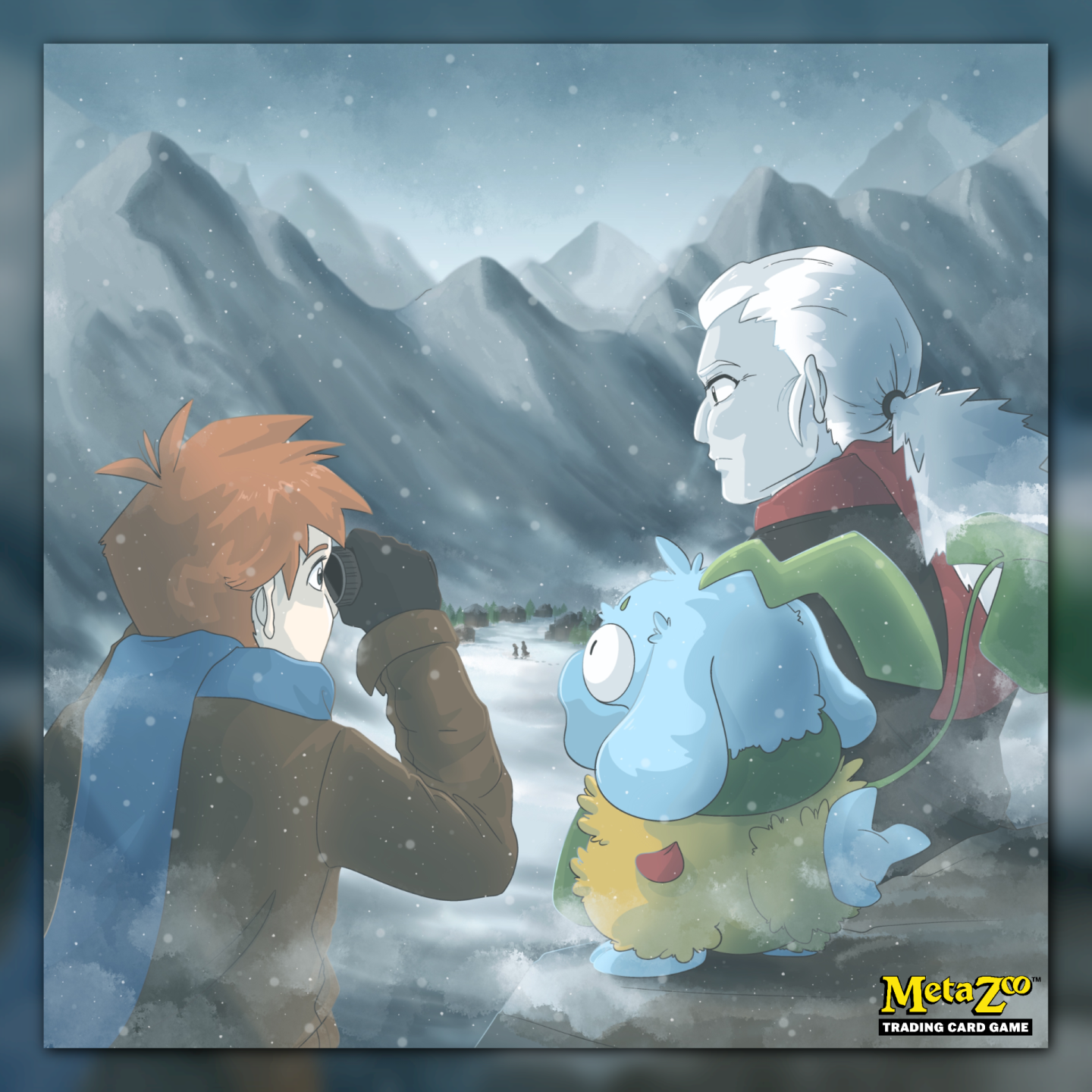
The days were brighter than any I would ever experience again—I suppressed a comment about feeling like Icarus, knowing Whitnail wouldn’t understand—and the nights found us directly among the stars all around us. Among the equipment on the cliff, Whitnail had recovered a tent and a pack stuffed with fire-making goods: a Primus stove, char cloth, waxed matches in a cork-sealed metal tube, and candles. So, each night, we wrapped the three of us in furs Whitnail had brought from the yeti caves, and we saved our limited tinder for when we were most desperate. Each morning, a half-dozen ravens scattered from our small camp. At one point, Arthur flushed a small nest of pikas—I called them mountain rats, but Whitnail insisted they were more like rabbits—and chased them around hopelessly.
On the third morning, I realized that I was struggling to recall Elena’s face, and it filled me with a horrible sadness. When I told Whitnail about it, he said, “I forget your face sometimes as well. It does not change how I remember you.”
I found this oddly reassuring.
And then, midmorning, days later, we came in sight of Kathmandu.
The outskirts of the city were far less modern than its inner workings, and as we maneuvered to a ledge where we could observe the activities below, we could make out blurred shapes moving before the temples and through the small markets. The sky was overcast, so the landscape was gray and, from that distance, seemingly lifeless. Whitnail and I hid behind a rocky outcropping, and he opened up the pack of equipment in search of field glasses.
“These will not provide x-ray vision,” he said as he handed them to me. “If the others searching for Blake are down there, I do not believe they will be conveniently standing at the beginning of the trail so you can easily find them.”
“I think there’s wisdom in scouting ahead,” I said. “There’s this book by a Chinese general, and in it, he says something like, ‘Let your plans be as dark and impenetrable as night, and when you move, fall like a thunderbolt.’”
“That is good advice, if you have plans. We do not.”
I scanned the outbuildings, temples, gardens, and market stalls with the field glasses, pausing on various figures—worshipers, sellers, laborers—none of whom seemed threatening or distressed. I had a vague hope that I would see Mohandas, alive and well and delivered to Kathmandu as Blake had said, but I did not. Beside me, Whitnail unwrapped the rifle that had been among the equipment outside the yeti caverns.
“We won’t need that,” I said.
He continued removing the cloth around the gun then paused to dig through the rest of the gear. “Again, I note that we have no plans, so your forecast makes no sense. Just the same, however. We do not have any—”
“Wait.” I caught a cold breath and stared in disbelief through the field glasses at two figures emerging from among the temples. Whitnail said nothing else. Even Arthur was silent as I adjusted the focus.
The German caster, Erik Ackler, was outfitted for a trek up the mountains, no doubt about it—I could see he even had a pair of sherpas waiting not far away, loaded down with camping and climbing gear. Ackler himself was layered in wool, a hooded jacket draped below his waist over those layers. Most notably, he had a pistol in a holster on the outside of his jacket. The holster was unfastened.
Next to him, similarly equipped, was a woman I’d not seen in years but whose face was almost as well known to me as my own. A sherpa waited near her as well while she bundled her long red hair under her hood and spoke with Ackler. While she did not look scared of the German caster, I was certain the open holster was designed to keep her in line, a quiet threat against my older sister Agnes. I thought she had started up the mountain weeks ago; clearly, she had delayed long enough for Ackler to catch up with her and make her his prisoner.
“This is bad,” I said.
Whitnail said, “What is it that you see?”
I handed him the field glasses.
As he looked, I reached over and took up the rifle. It felt heavy and ugly in my hands, and I had deep, reasonable fears that if I used it, I would miss, and Ackler would escape with my sister in tow. Or maybe I would miss Ackler and hit Agnes instead. Or he might even draw his pistol and charge into the foothills after me for a gunfight.
“I tried to tell you earlier,” Whitnail said, still scanning the outskirts below. “We do not have any bullets.”
Relieved, I put the rifle back.
“Yes, now I see them. Which one were you imagining you might shoot?”
I made a dismissive sound. “What are you on about? The German caster we met outside La Horgne.”
“Not his cryptid then.”
“No. I didn’t even see that he had a cryptid with him. One of the sherpas?” I took the field glasses and looked again. Ackler and Agnes were still talking, standing where they’d been before. The sherpas were occupied with their own packs and equipment; none of them looked like anything other than Nepali mountain climbers.
Whitnail said, “No. The one standing next to him. The midwife.”
The midwife.
Only minutes old, I’d seen a goat-like creature with fangs and hooves that had just delivered me. It wrapped me in a stained apron and placed me in my fainted mother’s arms. I could still imagine its musky, animal smell twenty years later. The first cryptid I ever encountered. The midwife.
I took the glasses back and looked down once more at my sister Agnes.
“Are you sure?” I whispered to Whitnail. I passed him the glasses and rolled over on my back, my face to the gray sky, my body suddenly unbearably heavy, my mind in a fog. I closed my eyes as he looked again.
He said, “Yes. And it is very ugly.”
I groaned and put my hands over my face. “My life is a Shakespearean tragedy. I should’ve been an orphan.”
Before Whitnail could respond, a gunshot echoed across the wide valley, and I heard the dull thud as something struck the outcropping not far below us. Whitnail ducked down beside me.
“They have field glasses as well. I believe they have seen us. And now they are coming this way.” He waited patiently while I shook my fists at the empty heavens and sampled some of my brothers’ best swear words. Arthur uttered a low, scolding quack. When I finally paused to catch my breath, Whitnail asked, “What shall we do?”
If they were still planning to come up the mountain in search of Blake, it meant they didn’t have the remains of his spellbook and the Cthulhu card in it. In fact, they probably assumed I had it now. Therefore, it was still out there somewhere, waiting to be recovered. My sister—the monstrous midwife—clearly didn’t need rescuing after all. And Ackler could shove off; we had no business to settle between us other than slinging insults.
So, I considered what I had in my spellbook—the tarasque, a chimera, a mummy. A kelpie. Humpledumple.
“We run,” I finally said.
So, we did.
We ran all the way back to Romania and Dracula’s lair, Poenari Castle.
And they chased us.
Here ends book 1 of A Conjuring of Cryptids: A Century of Finding the Unfindable by Abraham MacCamran, as told to Michael G. Ryan. The story will continue in book 2 and conclude in book 3.